

Tin Roofs vs PUF Panel Roofs: Which Is Better for Industrial Buildings?
When planning a factory, warehouse, industrial shed, or other commercial structure, choosing the right roofing system is an important decision. For many years, tin roofs have been a common choice for industrial and agricultural buildings because they are practical, readily available and relatively economical. Tin roofing sheets are available in different profiles, thicknesses, finishes and coatings, making them suitable for a wide range of structures.
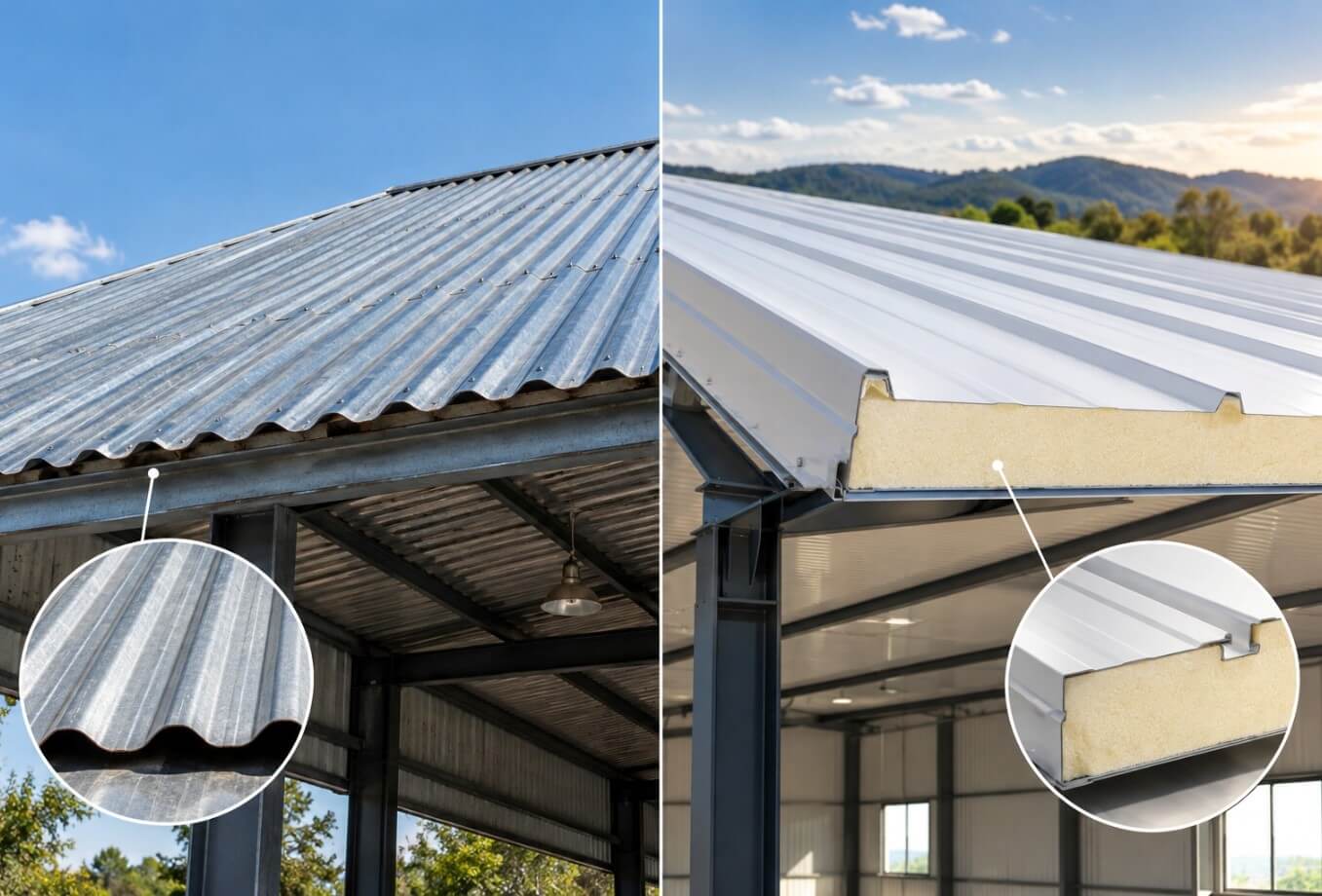
Today, you will find several options in the market, including galvanised tin roof sheets, corrugated tin roofs, profile tin sheets and other forms of tin roofing sheets. A conventional tin roof sheet can provide reliable protection from rain, sunlight and other outdoor conditions, which is why tin sheets for sheds continue to be widely used across India. For basic tin roofing sheets , the initial investment can also be an important consideration, especially when the project has a limited construction budget.
However, industrial buildings are changing. Modern factories and warehouses often need more than basic weather protection. Better thermal performance, improved indoor comfort, energy efficiency and controlled indoor conditions are becoming increasingly important. This is where PUF panel roofs offer an alternative approach by combining the roofing surface and thermal insulation into a single system.
So, should you continue with conventional tin roofing or consider a PUF panel roof for your industrial building? The answer depends on the building’s purpose, operating conditions and long-term requirements. In this blog, we compare tin roofs with PUF panel roofs across the key factors that matter when selecting an industrial roofing system, helping you understand which option may be more suitable for your project.
What are Tin Roofs?
When people talk about tin roofs, they are usually referring to a roof made from metal sheets used to cover a building. Despite the common name, modern tin roofing sheets are generally made from steel rather than pure tin. Depending on the project, these sheets may be galvanised or coated with materials that help protect them from outdoor conditions.
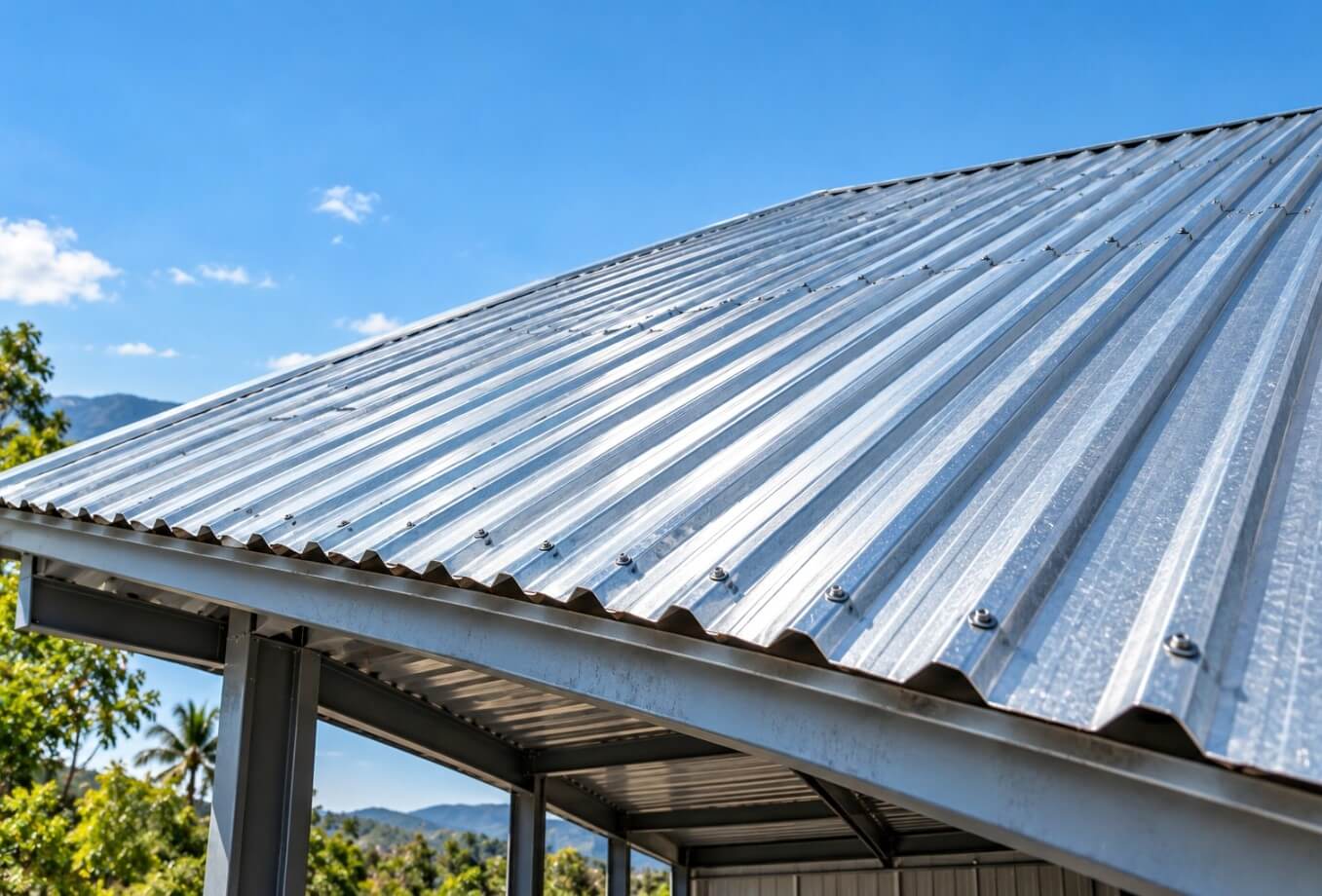
You may come across different options in the market, such as GI, PPGI and PPGL sheets, along with corrugated and trapezoidal profiles. Corrugated tin roofs are commonly seen on sheds, workshops and utility buildings, while a profile tin sheet is often used for factories, warehouses and larger industrial structures.
In simple terms, a tin roof sheet is fixed over the building’s structural framework using suitable fasteners. Multiple sheets are joined together with overlaps, while flashings and other roofing components are used around edges and joints.
There are different types of tin roofs available depending on the building and its requirements. Galvanized tin roofing is also widely used, particularly where a practical metal roofing solution is required.
From a small shed to a large industrial warehouse, tin roofing remains a familiar and widely used roofing option across India.
What Is a PUF Panel Roof?
A PUF panel roof is a type of prefabricated roofing system made using PUF (Polyurethane Foam) as its core material. It is commonly known as a sandwich panel because the insulating PUF core is placed between two layers of metal. The outer metal sheet forms the exposed roofing surface, while the PUF core sits in the middle and the inner metal sheet forms the underside of the panel.
Unlike a conventional tin roof sheet, where individual metal sheets are installed over the structural framework, a PUF roof panel comes as a complete, factory-made panel. The panels are available in different profiles, dimensions and specifications to suit different building designs.
PUF panel roofing is commonly used for factories, warehouses, industrial sheds, cold storage facilities, food processing units, pharmaceutical facilities and other buildings where a properly constructed roof system is required.
In simple terms, a PUF panel brings multiple layers into one ready-to-install roofing component. It provides the finished roof surface while the insulated core forms an important part of the overall roof construction.
So, while tin roofing sheets remain common choices for industrial and shed construction, a PUF panel roof represents a different approach to building the roof as a complete panel system. For detailed information, you can go through our dedicated page on PUF Panels.
Tin Roofs vs PUF Panel Roofs- Complete Comparison
When choosing a roof for a factory, warehouse, industrial shed or commercial building, it helps to look beyond the appearance of the roofing material. Tin roofs and PUF panel roofs are built differently and each one serves a different set of building requirements.
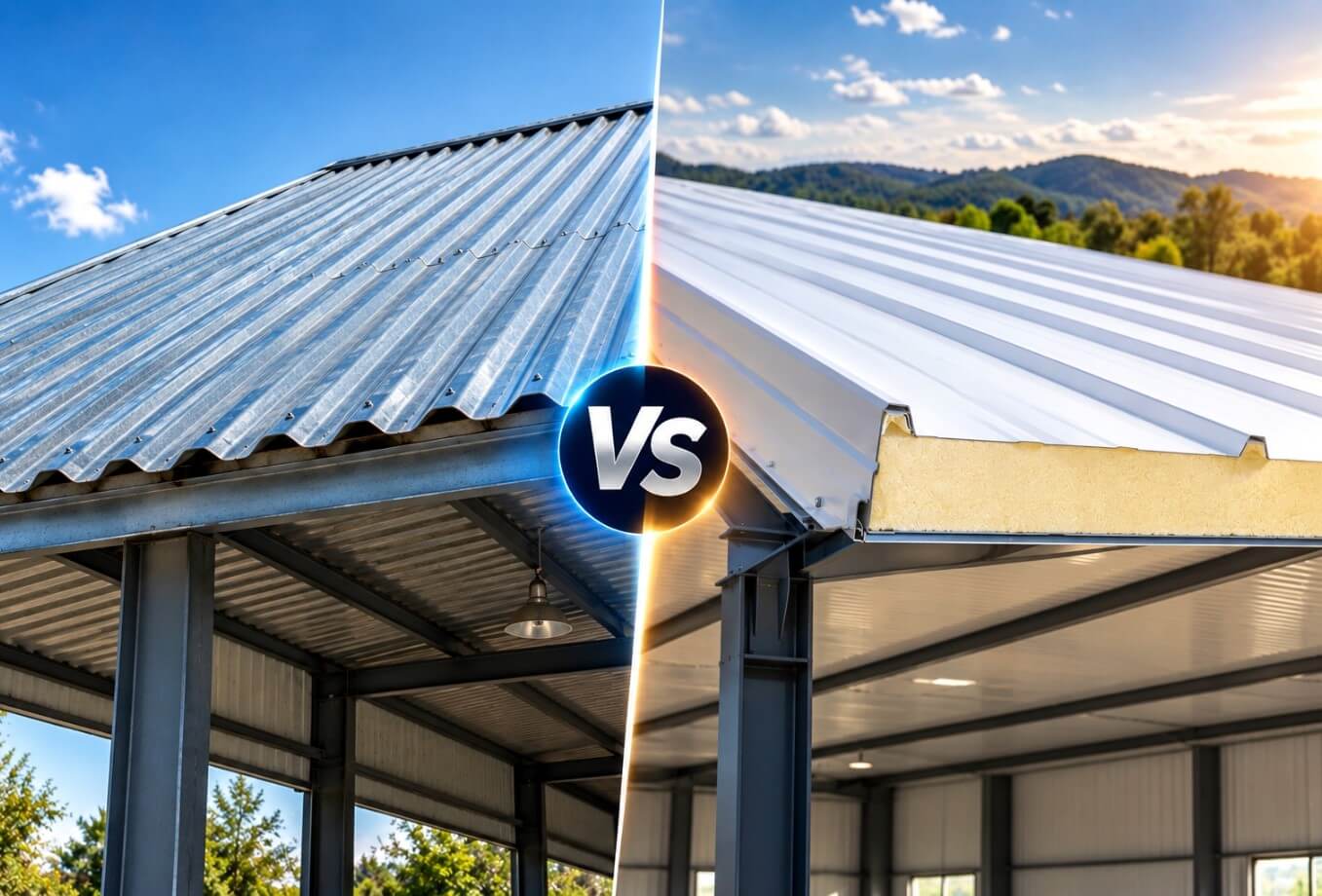
The comparison below gives you a quick view of the key differences between conventional tin roofing sheets and PUF panel roofing.
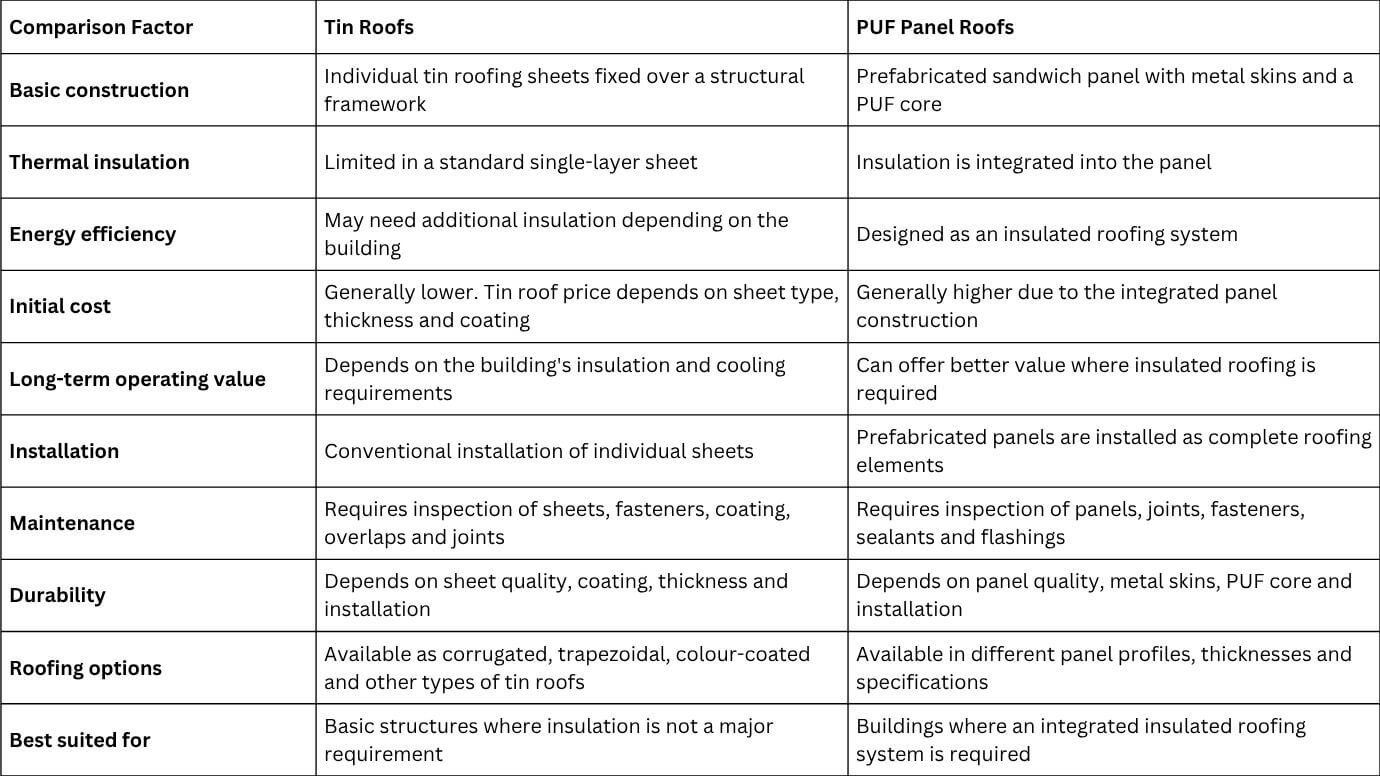
What Does This Comparison Mean for a Buyer?
The table makes one thing clear: there is no single roofing option that is right for every building. Conventional tin roofing can be a practical choice when you need straightforward weather protection and want to keep the initial investment under control. This is the reason tin roofs continue to be widely used for industrial structures and for sheds.
A PUF panel roof is a different type of roofing system. Its construction combines the roof surface and PUF core into one prefabricated panel, making it suitable for projects where an insulated building envelope is part of the requirement.
When comparing tin roof price with a PUF panel quotation, it is important to compare the complete roofing requirement rather than looking only at the price of the tin roof sheet or PUF panel per square foot. The building’s purpose, design and operating requirements should ultimately guide the decision.
Also Read: UPVC Roofing Sheet vs PUF Panel Roof
Which Roofing System Is Suitable for Different Applications?
The right roofing system depends on how the building will be used. A roof suitable for a basic storage shed may not be the right choice for a factory, cold storage facility or pharmaceutical unit. The decision should therefore be based on the building’s actual requirements rather than simply choosing the most commonly used roofing material.
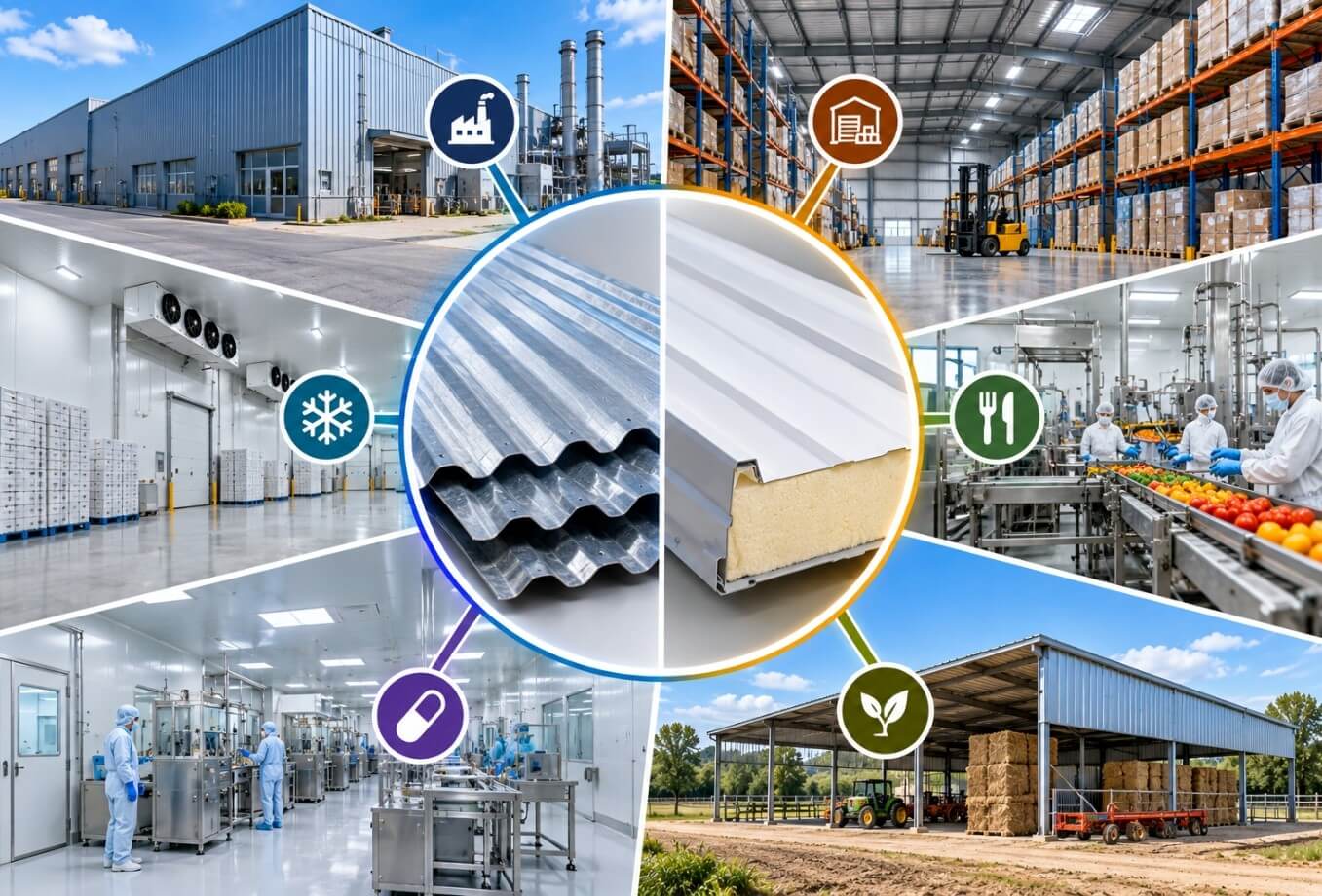
➲ Industrial Factories
For factories with machinery, workers and large open spaces, the roofing requirement depends on the production environment. Conventional tin roofs can work well where there is no major need for controlled indoor conditions. Where the building has significant heat generation, cooling requirements or a stronger need for indoor comfort, an insulated PUF panel system may be more suitable.
➲ Warehouses
For general-purpose warehouses storing products that are not sensitive to temperature, tin roofing sheets or a profile tin sheet can be a practical option. However, warehouses storing heat-sensitive goods or products requiring more controlled conditions may benefit from PUF panel roofing.
➲ Cold Storage
Cold storage facilities require a properly insulated building envelope to maintain controlled temperatures. This makes PUF panels a suitable choice for cold rooms and cold storage applications, where the roof forms an important part of the overall insulated structure. For more details, read our comprehensive page on Cold Storage.
➲ Food Processing Facilities
Food processing units require greater attention to hygiene, cleanliness, and environmental control. PUF panel systems can be suitable when the panel specification, internal finish, joints and overall construction are selected according to the facility’s requirements.
➲ Pharmaceutical & Clean Rooms
Pharmaceutical facilities and clean rooms require controlled environments and carefully designed construction. PUF panel systems are commonly considered for such applications because they can form part of a controlled and hygienic building envelope. Read more about Clean Rooms.
➲ Agricultural & Basic Utility Structures
For agricultural buildings, workshops, and basic utility sheds, conventional tin roofing can remain a practical choice. Corrugated tin roofs, galvanized tin roofing and other types of tin roofs are widely used for such structures.
Ultimately, the best roofing system is the one that matches the building’s purpose, operating conditions and specific requirements.
Factors to Consider Before Choosing Your Roof
Choosing a roof is about more than comparing material prices. Before ordering tin roofing sheets or PUF panels, you should first understand what your building needs today and how it may be used in the future.
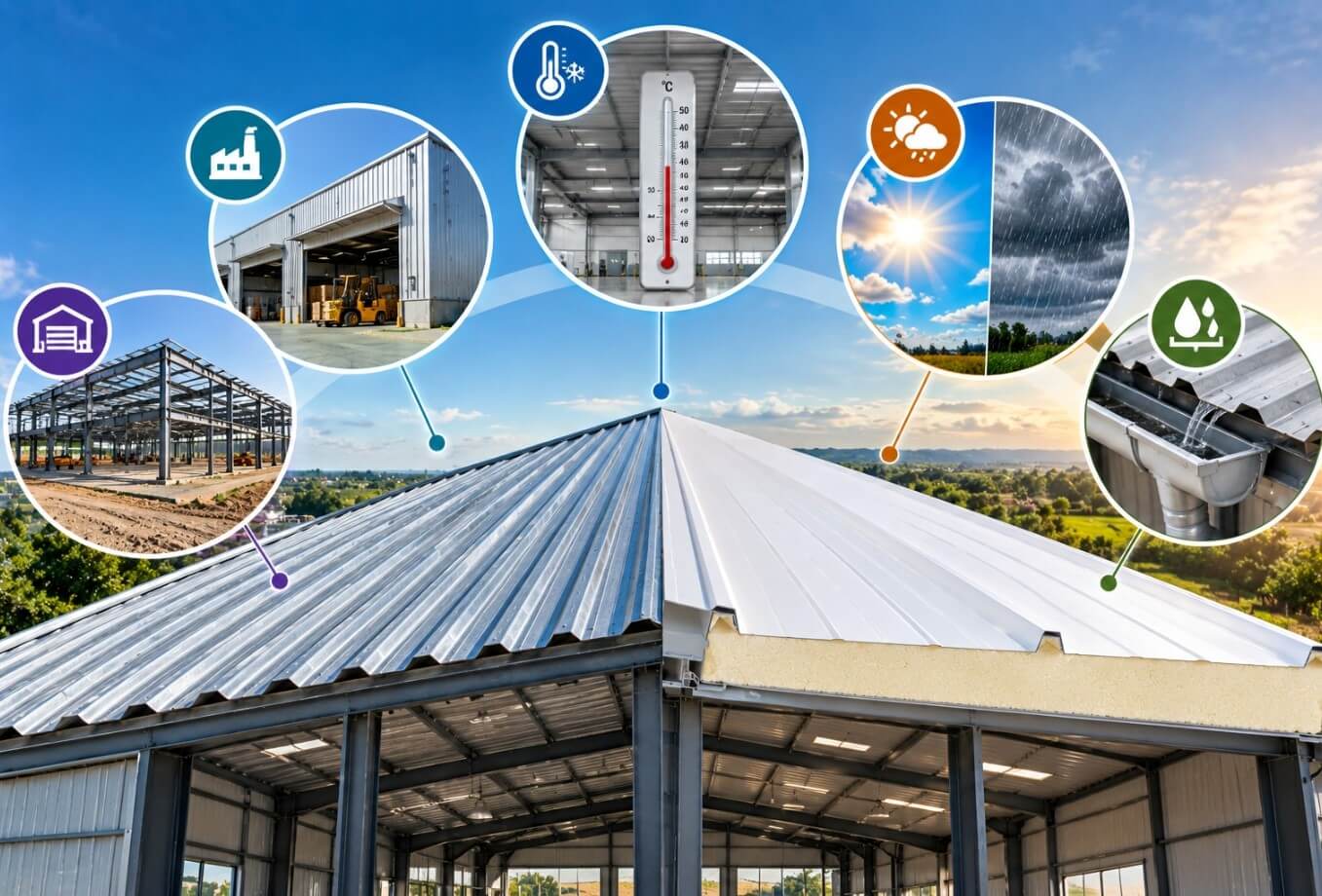
- Building Purpose Start with the building's purpose. A factory, warehouse, cold storage facility, agricultural building and workshop can all have different roofing requirements. The right choice should match the way the space will be used.
- Indoor Temperature Requirements Consider whether the building needs controlled indoor temperatures. If temperature management is important, it should be considered at the planning stage rather than choosing a tin roof sheet based only on its initial price.
- Local Climate India's hot summers, monsoon rains, humidity and changing weather conditions can affect roofing requirements. Select a roofing system that is appropriate for the location and expected weather exposure.
- Building Size and Structure Roof span, purlin spacing, structural loading, sheet dimensions and the overall building design should be checked before finalising the roofing material. A profile tin sheet, for example, needs to be suitable for the structure on which it will be installed.
- Material Specification Look beyond the product name. Check sheet thickness, coating, profile and material quality. For PUF panels, panel thickness and the PUF core specification should also match the project's requirements.
- Drainage and Installation Proper roof slope, gutters, downpipes, flashing, joints and fasteners are important for managing rainwater. Even quality galvanized tin roofing can develop problems if the installation and drainage are not handled correctly.
- Future Requirements Don't base the decision only on today's tin roof price. Think about how the building may be used several years from now. Whether you are considering corrugated tin roofs or PUF panels, selecting the right system at the planning stage can help you avoid costly changes later.
You can also go through: PPGI vs PPGL Sheet
Common Mistakes to Avoid When Selecting Industrial Roofing
Choosing industrial roofing only by looking at the product price can lead to problems later. Before selecting tin roofing sheets, PUF panels or any other roofing system, avoid these common mistakes.
- Choosing Only on Initial Price A low tin roof price may look attractive at first, but the cheapest option is not always the right one. Consider the building's complete requirements and expected operating conditions before making the final decision.
- Ignoring Insulation Requirements A basic tin roof sheet may be suitable for some sheds, but factories, warehouses, and temperature-sensitive facilities may have different requirements. Consider insulation early rather than trying to address it after the roof has already been installed.
- Selecting the Wrong Specification There is no single roofing specification that works for every building. Whether you choose galvanised tin roof sheets, profile tin sheet or PUF panels, factors such as thickness, profile, structure and building use should be considered before ordering.
- Neglecting Drainage Rainwater needs a clear path away from the roof. Incorrect slope, poorly designed gutters, blocked drainage or badly finished joints can lead to leakage even with good-quality galvanized tin roofing.
- Using Inexperienced Installers Good materials still need proper installation. Incorrect fixing, overlaps, flashing, joints and sealants can affect the overall roofing system.
- Ignoring the Complete Building Finally, don't look at the roof in isolation. Roofing works together with the walls, doors, ventilation, insulation and overall building design. Whether you are installing corrugated tin roofs for a shed or planning a large industrial facility, the complete building envelope should be considered before making the final choice.
Why Choose Technopuff Solutions?
Choosing the right roof is often only one part of a larger construction decision. Whether you are comparing tin roofing sheets or PUF panels, the roofing system needs to work well with the overall design and purpose of the building. Technopuff Solutions provides a range of prefabricated and insulated building solutions, allowing businesses to address their roofing and building requirements under one roof.
Key solutions include:
- PUF wall panels and roof panels for insulated industrial and commercial buildings
- Pre-engineered buildings (PEB) for factories, warehouses and other industrial structures
- Cold storage solutions for temperature-controlled facilities
- Clean room solutions for pharmaceutical, healthcare, and other controlled environments
- Insulated doors for cold rooms, clean rooms and industrial applications
- Prefabricated structures for a range of commercial and industrial requirements
The right choice is not always about selecting the lowest tin roof price or comparing the cost of tin roofs with another material on a per-square-foot basis. Factors such as the building’s purpose, structure, insulation requirements and future use also matter.
From a simple tin roof for shed application to a complete insulated industrial facility, Technopuff Solutions can help businesses evaluate the roofing and building requirements and select a solution suited to the project.
FAQs
A. Tin roofs are generally made from individual metal roofing sheets fixed over a structural framework, while a PUF panel roofs are prefabricated sandwich panels with a metal outer skin, PUF insulation core and inner metal skin. In simple terms, tin roofing sheets provide the roof covering, while PUF panels combine the roof and insulation into one panel system. You can also go through our dedicated blog on Roof PUF Panel vs Profile Sheet.
A. Corrugated tin roofs can be suitable for sheds, workshops, agricultural buildings and other structures where conventional metal roofing is appropriate. The final selection should consider the structure, sheet specification, roof slope, drainage and intended use of the building.
A. The tin roof price depends on several factors, including sheet thickness, material, coating, profile, project size, quantity, transportation, accessories and installation. Therefore, the cost of tin roofs can vary significantly from one project to another. It is better to compare quotations based on the complete roofing specification rather than only the sheet price.
A. The service life of a PUF panel roof depends on factors such as panel quality, metal coating, installation, environmental conditions, maintenance and exposure to weather. Proper installation and regular inspection can help maintain the roofing system over its service life. The same principle applies to galvanized tin roofing and other metal roofing systems.
A. In many cases, PUF panels can be considered for an existing industrial structure, but the building should first be assessed for structural suitability. The existing framework, purlin spacing, roof loading, panel dimensions, drainage and fixing arrangement need to be evaluated before installation. This is particularly important when replacing existing tin roofs or other traditional types of tin roofs.
Conclusion
Choosing between traditional tin roofs and PUF panel roofs ultimately depends on what your building needs. A conventional roof can be a practical choice for sheds, workshops, warehouses and utility structures where basic weather protection is the main requirement and keeping the initial investment under control is important. Tin roofing sheets continue to be widely used for such applications because they offer a straightforward roofing solution.
A PUF panel roof becomes more suitable when the building requires an insulated roofing system or when temperature control and indoor conditions are important. This can include factories, warehouses storing sensitive products, cold storage facilities, food processing units, pharmaceutical facilities and other controlled environments. In these applications, the roofing system needs to be considered as part of the overall building design rather than simply as an outer covering.
When making your decision, don’t look only at the cost of tin roofs. Think about how the building will be used today, how it may be used in the future and what the overall project requires. A tin roof sheet may be perfectly suitable for one building, while a PUF panel system may make more sense for another.
Ultimately, there is no one-size-fits-all roofing solution. The best choice is the one that matches your building’s purpose, environment, performance requirements and long-term operating needs. Whether you are planning a simple tin roof for shed or developing a complete industrial facility, making the right roofing decision at the planning stage can help you build with greater confidence.
For more information, you can explore our Homepage.

