

UPVC Roofing Sheet vs PUF Panel Roofing

Choosing the wrong roofing system can do more than just increase construction costs, it can lead to higher electricity bills, frequent maintenance and reduced comfort inside your building. As industries continue to focus on energy efficiency and long-term savings, selecting the right roofing material has become an important business decision. Today, many builders and business owners compare UPVC roofing sheet solutions with PUF panel roofing to determine which option offers better performance for their specific requirements.
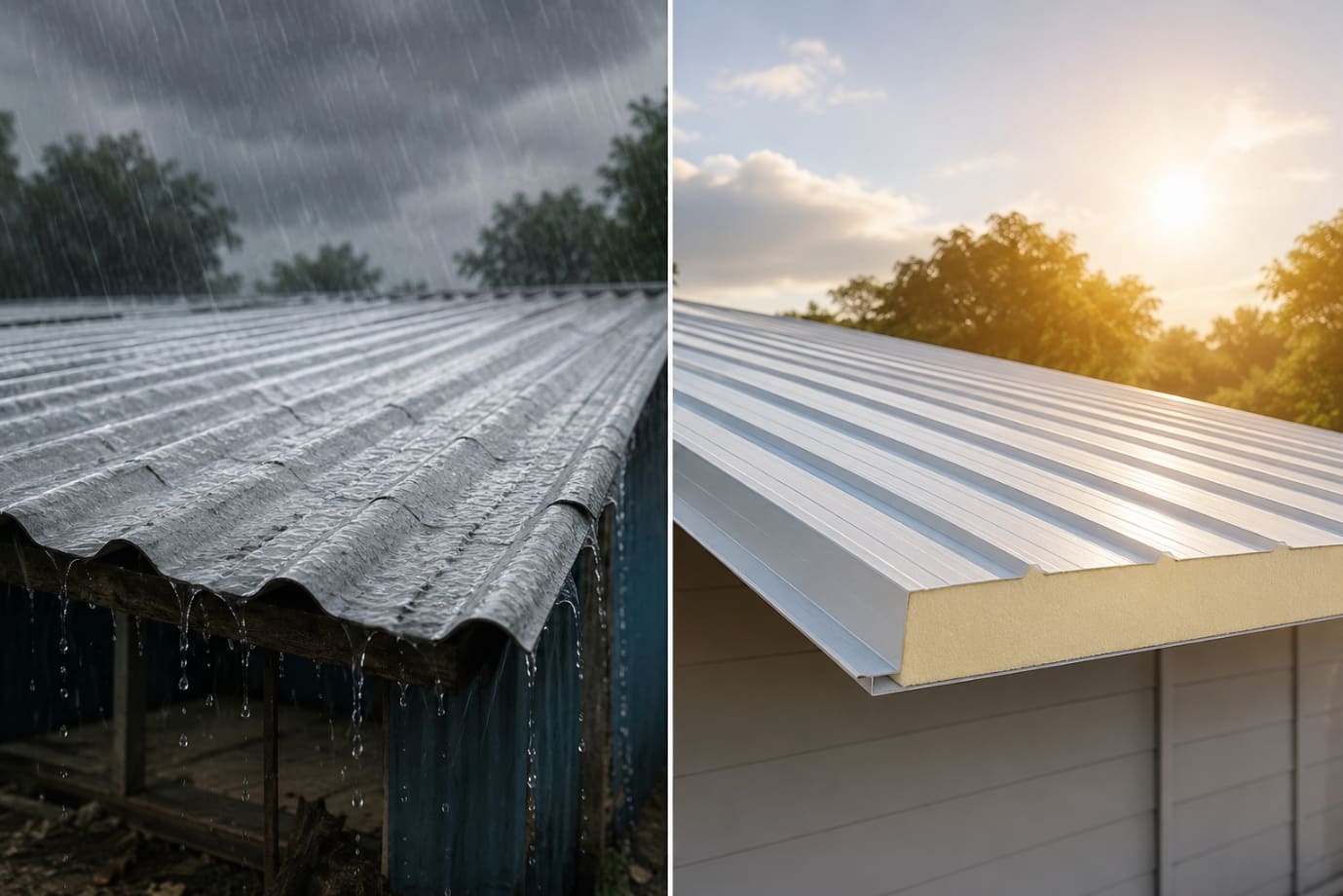
UPVC Roofing Sheet vs PUF Panel Roofing

A UPVC sheet is widely used in industrial, commercial and agricultural buildings because of its excellent resistance to corrosion, chemicals and harsh weather conditions. Businesses often evaluate factors such as UPVC roofing sheets price, durability and installation costs before making a decision. Whether it is a UPVC roof for a warehouse or a UPVC roof tile for a commercial structure, every roofing solution has its own advantages depending on the application.

Modern construction projects also offer different options, including UPVC plain sheets, various UPVC roofing sheet size configurations and corrugated UPVC roofing sheet designs that suit different structural needs. Similarly, UPVC roof panels are becoming increasingly popular for projects where lightweight construction and low maintenance are priorities. However, for industries that require superior thermal insulation and better energy efficiency, PUF panel roofing is often considered a preferred alternative.

In this comprehensive blog, we will compare UPVC roofing sheet and PUF panel roofing based on insulation, durability, maintenance, installation, cost, weather resistance and long-term value. By the end of this blog, you will have a clear understanding of which roofing solution is the right investment for your industrial, commercial or warehouse project.

Understanding UPVC Roofing Sheets

A UPVC roofing sheet is a durable and lightweight roofing material made from Unplasticized Polyvinyl Chloride (UPVC). Unlike traditional PVC, UPVC does not contain plasticizers, making it stronger, more rigid and highly resistant to corrosion, chemicals, moisture and UV rays. This makes a UPVC sheet a popular choice for factories, warehouses, agricultural buildings, parking sheds and industrial structures where long-lasting performance is essential.
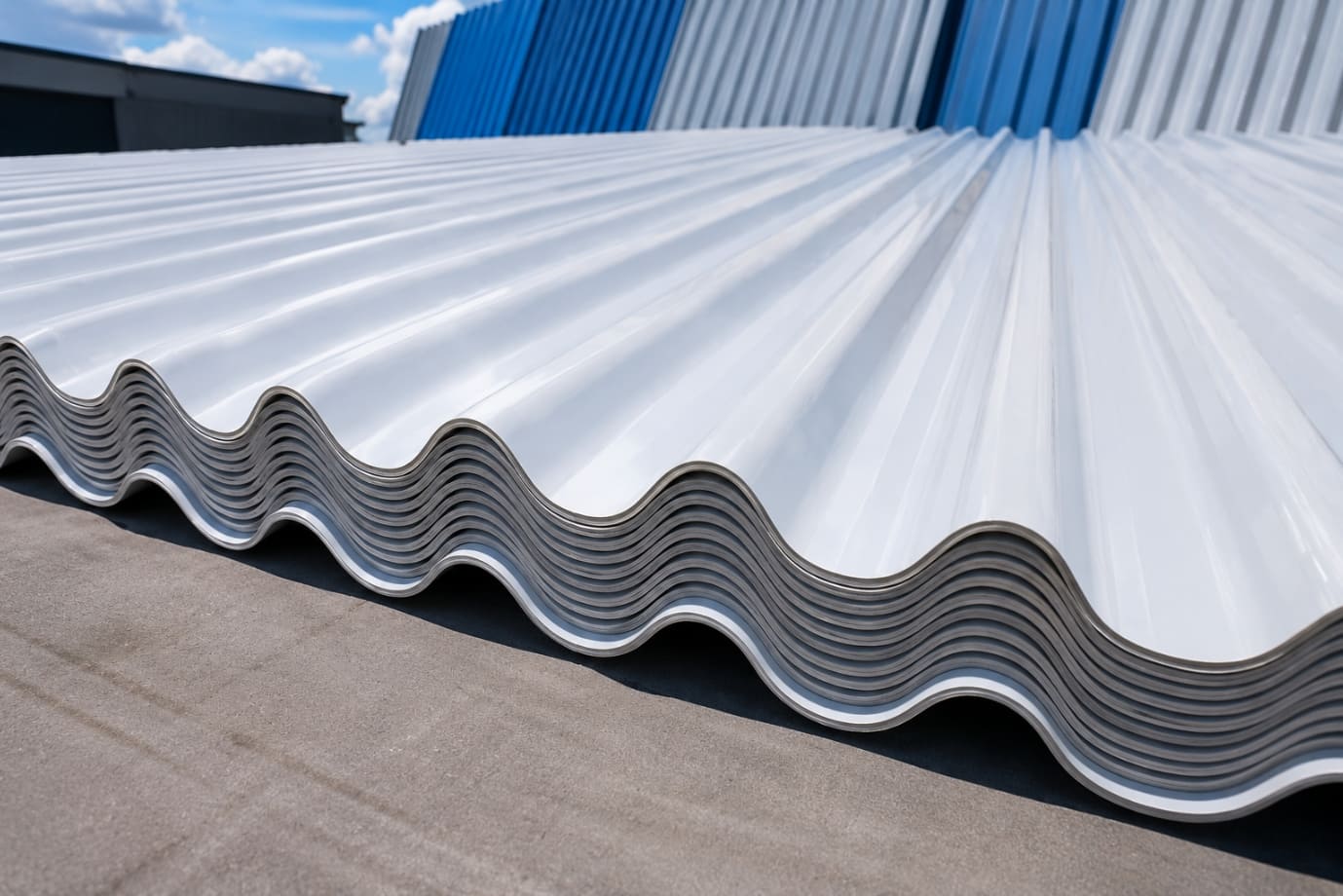
Understanding UPVC Roofing Sheets

The manufacturing process involves blending high-quality UPVC resin with stabilizers, pigments and UV-resistant additives. The mixture is then extruded into different profiles and cooled to create strong roofing products. Depending on the project requirements, manufacturers offer various UPVC roofing sheet size options, thicknesses generally ranging from 1.5 mm to 3 mm or more and profile designs such as the widely used corrugated UPVC roofing sheet. Some projects also use UPVC plain sheets for wall cladding and partitions, while UPVC roof panels provide enhanced coverage for larger industrial roofs. In addition, interior UPVC cladding is commonly used to create hygienic, moisture-resistant interior surfaces in commercial and industrial buildings.

Many buyers also compare the UPVC roofing sheets price before selecting a roofing solution. While the cost depends on thickness, profile and quality, a UPVC roof offers excellent value because of its low maintenance and long service life, often lasting 20 to 30 years or more with proper installation. For decorative applications, a UPVC roof tile is another option that combines durability with an attractive appearance.

What is Roof PUF Panel?

A Roof PUF Panel is an advanced insulated roofing system designed to provide excellent thermal performance, durability and structural strength for industrial and commercial buildings. It is manufactured using a sandwich panel construction, where a high-density polyurethane foam (PUF) core is securely bonded between two metal facings, usually made of pre-painted galvanized steel (PPGI) or galvanized iron (GI). This combination creates a lightweight yet strong roofing solution that offers superior insulation and long-lasting performance. Some people also go for decking sheets instead of PPGI and PPGL for PUF Panels. Detailed information can be seen in our dedicated blog on Decking Sheets vs PPGI/PPGL Sheet PUF Panels and then choose the better one.

The polyurethane foam core acts as an effective barrier against heat transfer, helping maintain comfortable indoor temperatures throughout the year. As a result, Roof PUF Panels significantly reduce the need for air conditioning, lower energy consumption and improve the overall efficiency of factories, warehouses, cold storage facilities and commercial buildings. They are commonly available in standard thicknesses ranging from 30 mm to 150 mm, allowing businesses to choose the right insulation level based on their project requirements.

When comparing a Roof PUF Panel with a UPVC roofing sheet, the biggest difference lies in insulation. While a UPVC sheet offers excellent resistance to corrosion, chemicals and weather, it provides limited thermal insulation compared to PUF panels. Although factors such as UPVC roofing sheets price and project budget may influence the decision, businesses that prioritize energy savings, indoor comfort and operational efficiency often prefer Roof PUF Panels over a conventional UPVC roof for long-term value.

For detailed information, you can go through our dedicated page on PUF Panels.

UPVC Roofing Sheet vs PUF Panel Roofing – Quick Comparison

Selecting the right roofing material is essential for achieving better energy efficiency, durability and long-term cost savings. While a UPVC roofing sheet is known for its excellent resistance to corrosion, chemicals and harsh weather, Roof PUF Panels are designed to deliver outstanding thermal insulation and energy efficiency. Many buyers compare the UPVC roofing sheets price and Roof PUF Panels before making a decision, but it is equally important to evaluate long-term operating costs, maintenance requirements and overall performance. Whether you are considering UPVC roof panels or an insulated PUF roofing system, the comparison below will help you choose the most suitable solution for your industrial or commercial project.
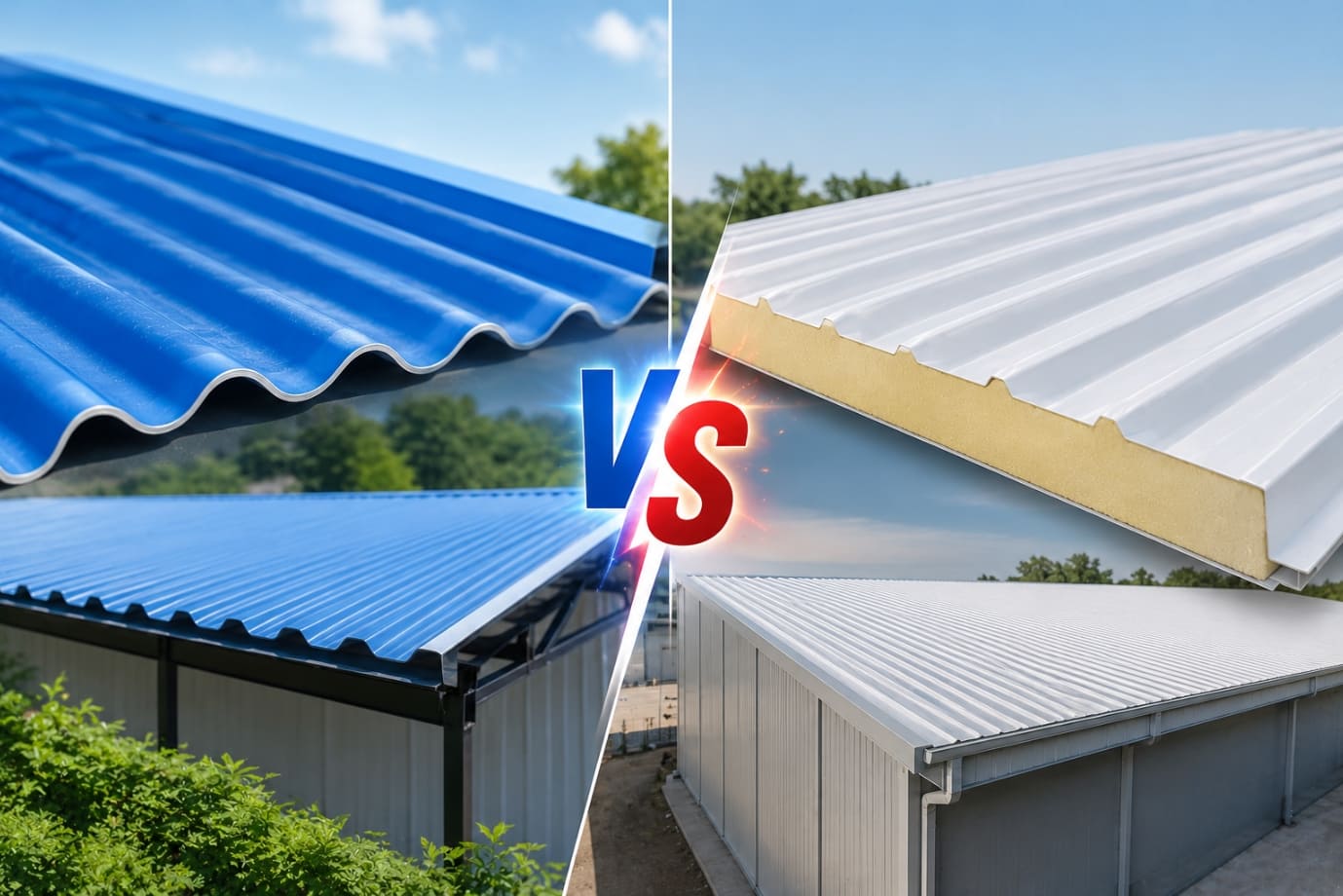
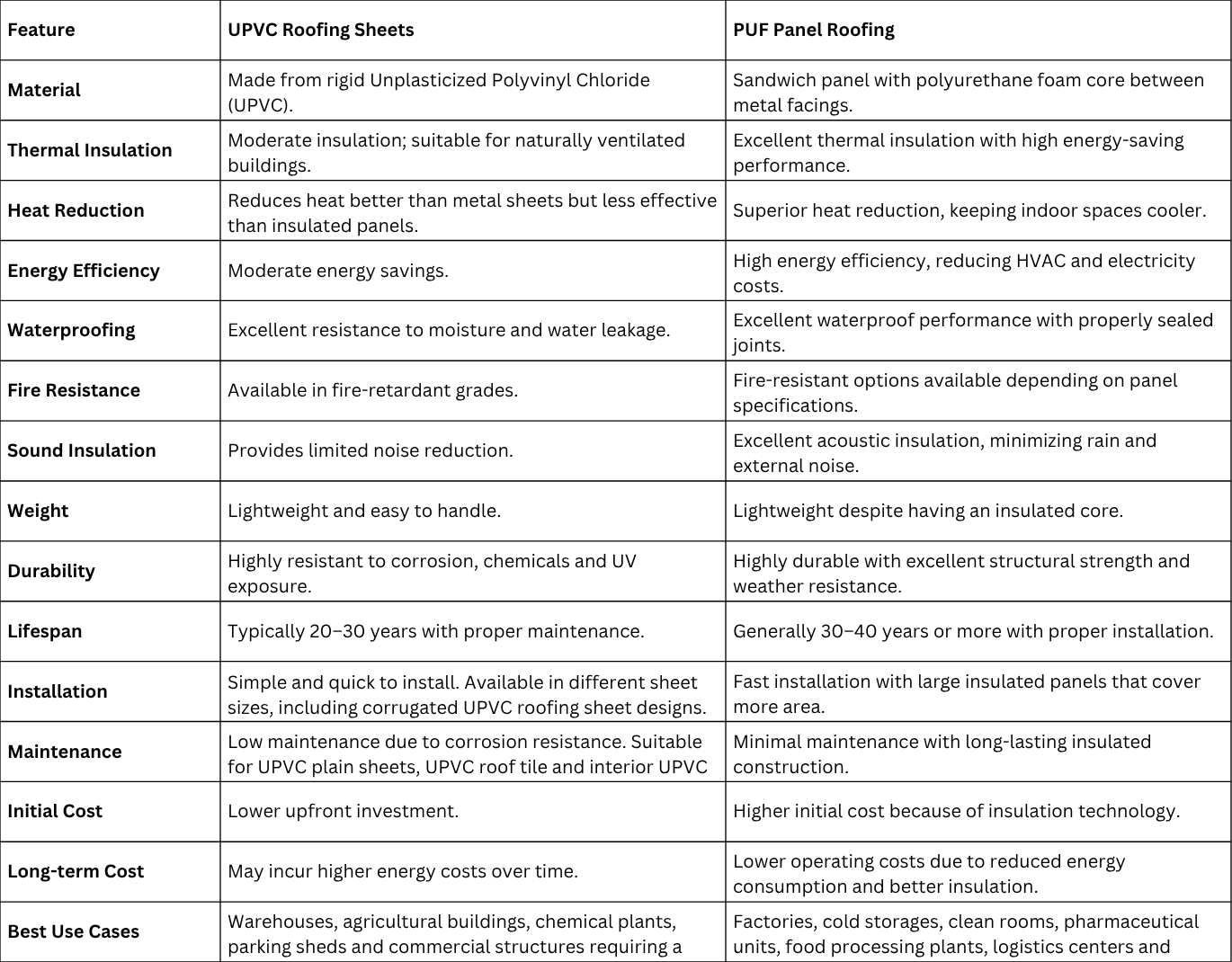
UPVC Roofing Sheet vs PUF Panel Roofing – Quick Comparison

The comparison shows that both roofing systems have distinct advantages. A UPVC roofing sheet is an excellent choice for projects that require corrosion resistance, low maintenance and cost-effective roofing. On the other hand, Roof PUF Panels provide unmatched thermal insulation, energy efficiency and long-term operational savings, making them the preferred solution for modern industrial and commercial buildings where indoor temperature control is a priority.

Also Read: Steel Roof Sheets vs PUF Panel Roof

Advantages of UPVC Roofing Sheets

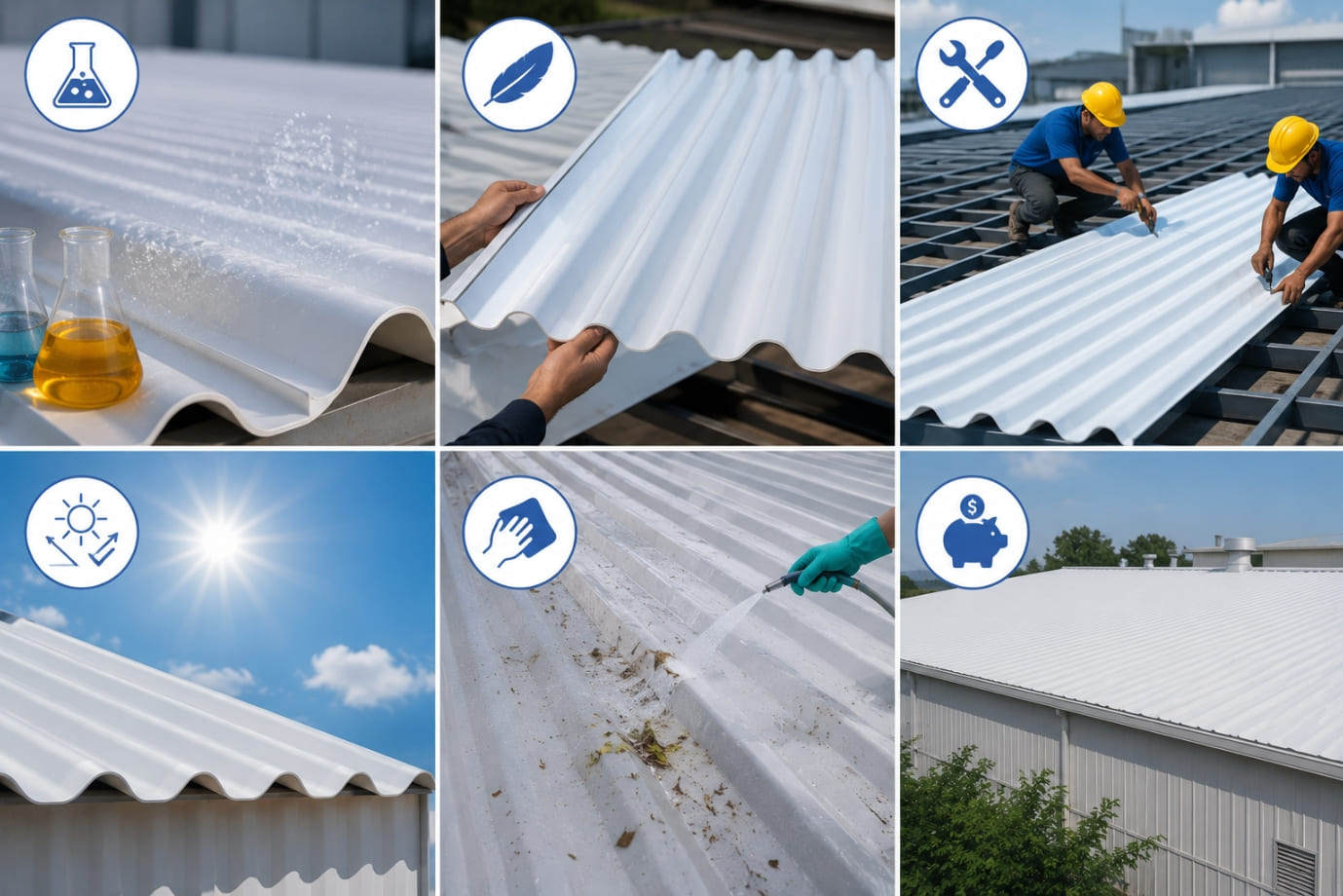
A UPVC roofing sheet is a popular roofing solution for industrial, commercial and agricultural buildings due to its durability, affordability and low maintenance. A UPVC sheet is specially designed to withstand harsh weather, moisture, chemicals and UV exposure, making it suitable for long-term use.
Advantages of UPVC Roofing Sheets

Some key advantages of UPVC roofing sheet include:

Advantages of PUF Panel Roofing

PUF Panel Roofing is one of the most advanced roofing solutions for industrial and commercial buildings. Unlike a UPVC roofing sheet or a standard UPVC sheet, PUF panels are built with a high-density polyurethane foam core that provides exceptional thermal insulation and energy efficiency. This makes them an ideal choice for factories, warehouses, cold storages, pharmaceutical units and food processing facilities where temperature control is essential.

Some key advantages of PUF Panel Roofing include:

When Should You Choose UPVC Roofing Sheets?

A UPVC roofing sheet is the right choice when your project requires a durable, weather-resistant and cost-effective roofing solution without the need for high thermal insulation. It is widely used in industrial, commercial and agricultural applications because of its excellent resistance to corrosion, chemicals and moisture.
When Should You Choose PUF Panel Roofing

You should consider a UPVC sheet in the following situations:

If your building does not require insulated roofing, a UPVC roofing sheet offers an economical and dependable solution with minimal maintenance.

When Should You Choose PUF Panel Roofing?

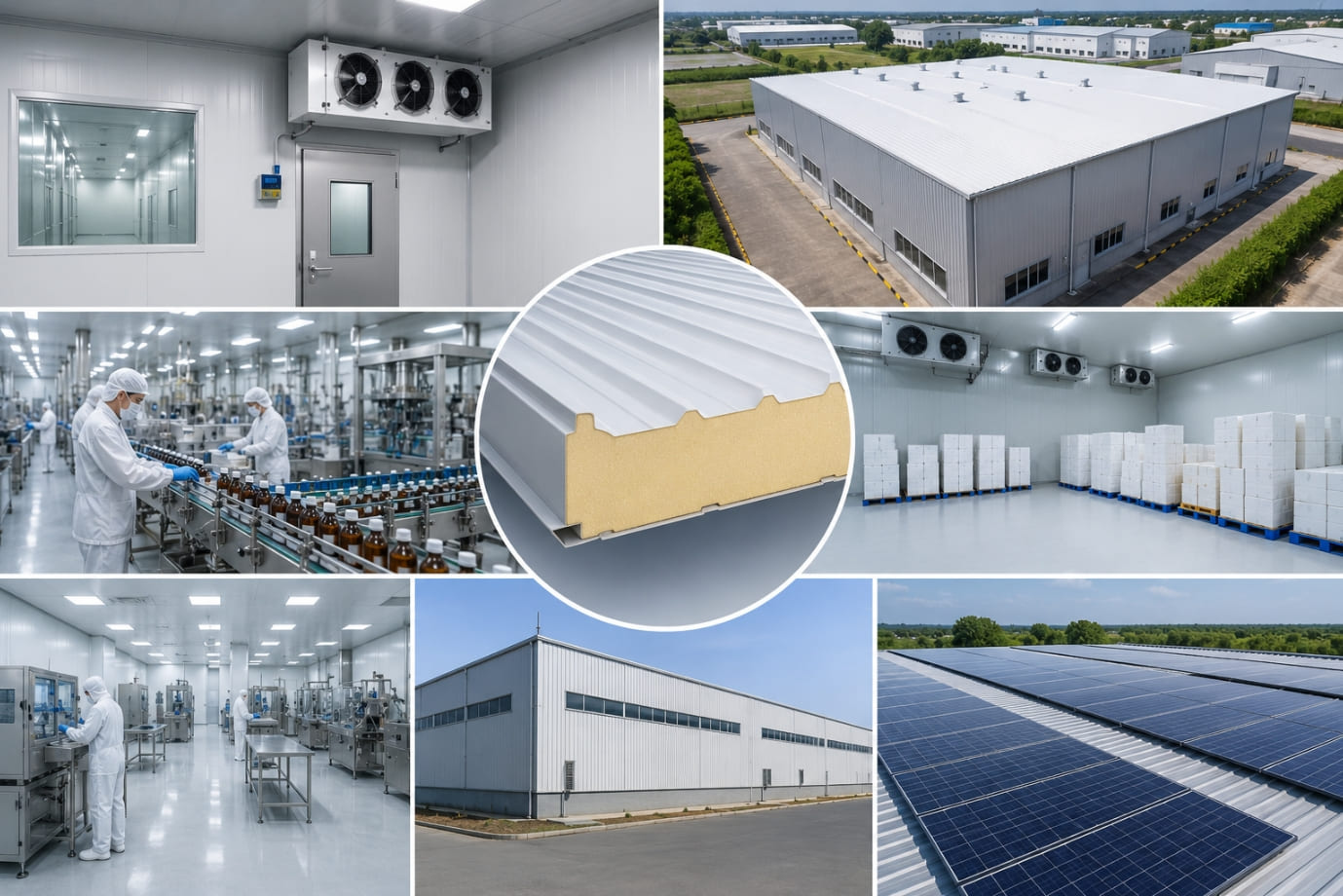
PUF Panel Roofing is the ideal choice for buildings that require superior thermal insulation, energy efficiency and precise temperature control. Unlike a traditional UPVC roofing sheet or UPVC sheet, PUF panels are designed with an insulated polyurethane foam core that minimizes heat transfer and helps maintain a consistent indoor environment. Although a UPVC roof is suitable for naturally ventilated buildings, PUF Panel Roofing is a better investment for projects where insulation and long-term energy savings are priorities.

You should choose PUF Panel Roofing in the following situations:

While a corrugated UPVC roofing sheet and UPVC roof panels are excellent for cost-effective, non-insulated applications, PUF Panel Roofing is the preferred option for businesses seeking maximum energy efficiency, indoor comfort and long-term operational savings.

Which Roofing Solution Offers Better Long-Term Value?

When evaluating a roofing system, it is important to look beyond the initial investment and consider long-term performance, operating costs and overall return on investment. A UPVC roofing sheet is an excellent option for projects that require a durable, corrosion-resistant and low-maintenance roof without the need for insulation. A UPVC sheet also performs well in naturally ventilated warehouses, agricultural buildings and chemical industries, while interior UPVC cladding and UPVC roof panels add versatility for wall and roofing applications.

However, if long-term operational efficiency is your priority, PUF Panel Roofing offers greater value. Its superior thermal insulation significantly reduces heat transfer, leading to lower electricity bills by minimizing the use of air conditioning and ventilation systems. This creates a more comfortable indoor environment, improving employee productivity and protecting temperature-sensitive equipment, raw materials and finished products. Better insulation also helps extend the life of machinery by reducing exposure to extreme temperatures.

Although a UPVC roof requires less maintenance than many conventional roofing materials, PUF Panel Roofing delivers additional savings through improved energy efficiency and reduced operating expenses. It also supports sustainable construction by lowering energy consumption and carbon emissions.

In conclusion, a UPVC roofing sheet remains a practical and cost-effective choice for non-insulated buildings. However, for factories, cold storage facilities, clean rooms and energy-conscious industrial projects, PUF Panel Roofing provides the best long-term value through higher ROI, enhanced sustainability and superior thermal performance.

FAQs

A. Yes, While a UPVC sheet has a lower upfront cost, PUF roofing panels provide long-term savings through lower electricity bills, better insulation and reduced maintenance, making them a cost-effective investment over time.

A. A UPVC roofing sheet offers better heat resistance than conventional metal roofing sheets and helps maintain a cooler indoor environment. However, PUF panel roofing provides much higher thermal insulation for temperature-sensitive buildings.

A. A UPVC roofing sheet is suitable for naturally ventilated warehouses where insulation is not required. For temperature-controlled warehouses and logistics facilities, PUF panel roofing is the better choice due to its excellent thermal insulation.

A. Yes. In many renovation projects, PUF panels can be installed over or integrated with an existing UPVC roof, provided the supporting structure is strong enough and assessed by roofing professionals.

A. A UPVC sheet already requires very little maintenance because it resists corrosion, chemicals and moisture. PUF panels are also low-maintenance, but they offer the added benefit of reducing energy costs through superior insulation.

Conclusion

Both PUF Panel Roofing and UPVC roofing sheet solutions offer unique benefits and the best choice depends on the specific needs of your project. A UPVC sheet is an excellent option for warehouses, agricultural sheds, parking structures and chemical industries where corrosion resistance, low maintenance and affordability are the primary concerns. Businesses comparing UPVC roofing sheets price often find UPVC to be a practical solution for non-insulated buildings. With multiple UPVC roofing sheet size options, including corrugated UPVC roofing sheet, UPVC roof panels, UPVC plain sheets and UPVC roof tile, it provides flexibility for a wide range of industrial and commercial applications. Interior UPVC cladding further enhances its versatility for hygienic wall and ceiling installations.

On the other hand, PUF Panel Roofing is the preferred choice for projects that demand superior thermal insulation, excellent acoustic performance, energy efficiency and lower operating costs. It is particularly suitable for factories, cold storage facilities, clean rooms, pharmaceutical units and food processing plants where maintaining a controlled indoor environment is essential. Although the initial investment may be higher than a traditional UPVC roof, the long-term savings in electricity, maintenance and operational efficiency often deliver a better return on investment.

If you’re unsure which roofing solution is right for your project, the experts at Technopuff Solutions are here to help. We assess your building’s purpose, climate conditions, budget and performance requirements to recommend the most suitable roofing system. Contact Technopuff Solutions today to find a durable, energy-efficient and cost-effective roofing solution tailored to your industrial or commercial needs.

For more information, you can explore our Homepage.

Leave a Comment

Your email address will not be published. Required fields are marked *

Get In Touch
× How can I help you?