

Continuous vs Discontinuous Panel Lines: Key Differences, Advantages & Applications
The demand for PUF panels is growing rapidly across industries where temperature control, energy efficiency and durable construction are important. From industrial buildings and warehouses to cold storage facilities, pharmaceutical units and cleanrooms, these panels have become a preferred choice for creating insulated and controlled environments. As the demand for these products increases, choosing the right panel production technology becomes equally important for manufacturers.
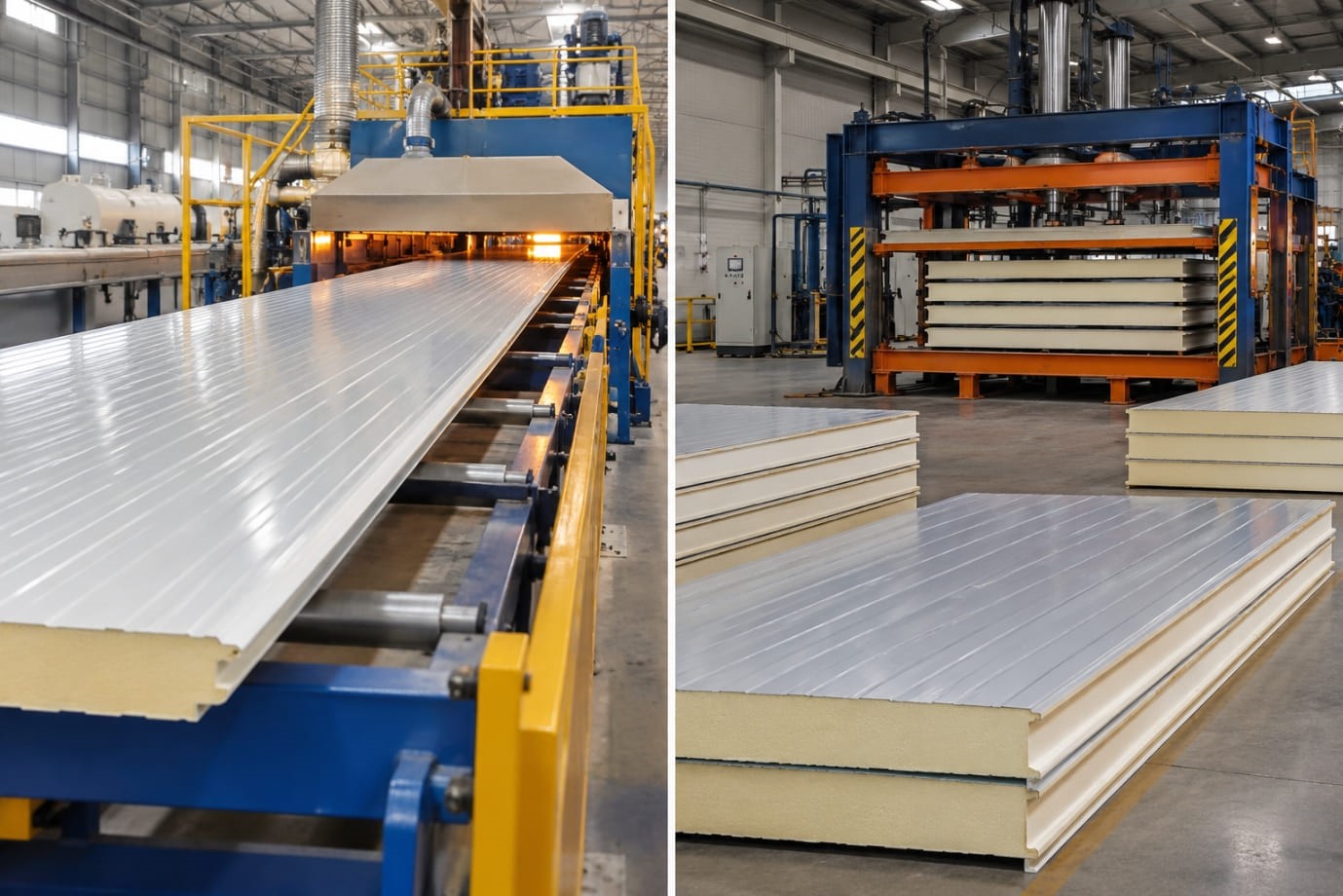
In the insulated panel industry, two commonly used production technologies are the continuous panel lines and the discontinuous panel lines. Both are designed to manufacture insulated sandwich panels, but they differ in several aspects, including production capacity, automation, flexibility, investment requirements and the range of panel specifications they can accommodate. A continuous sandwich panel line is generally preferred for large-scale production and standardized panel requirements, whereas a discontinuous system offers greater flexibility for customized products and smaller production batches.
Understanding the difference between a continuous and discontinuous panel line is important for manufacturers planning to expand their production capabilities, as well as businesses looking for reliable insulated panel solutions. The right choice depends on production goals, customer requirements, available investment and the type of panels being manufactured.
In this blog, we will explore the key differences between continuous and discontinuous panel lines, their major advantages, limitations and industrial applications. We will also discuss the important factors to consider when selecting the right panel production technology for different manufacturing requirements.
Understanding Continuous Panel Lines
A continuous panel line is an advanced production system designed to manufacture insulated sandwich panels in large quantities. It is widely used by manufacturers who require consistent quality, standardized specifications and higher production output. Unlike a discontinuous panel line, which produces panels in separate batches, a continuous system operates through an integrated setup where materials move through different production stages with minimal interruptions.
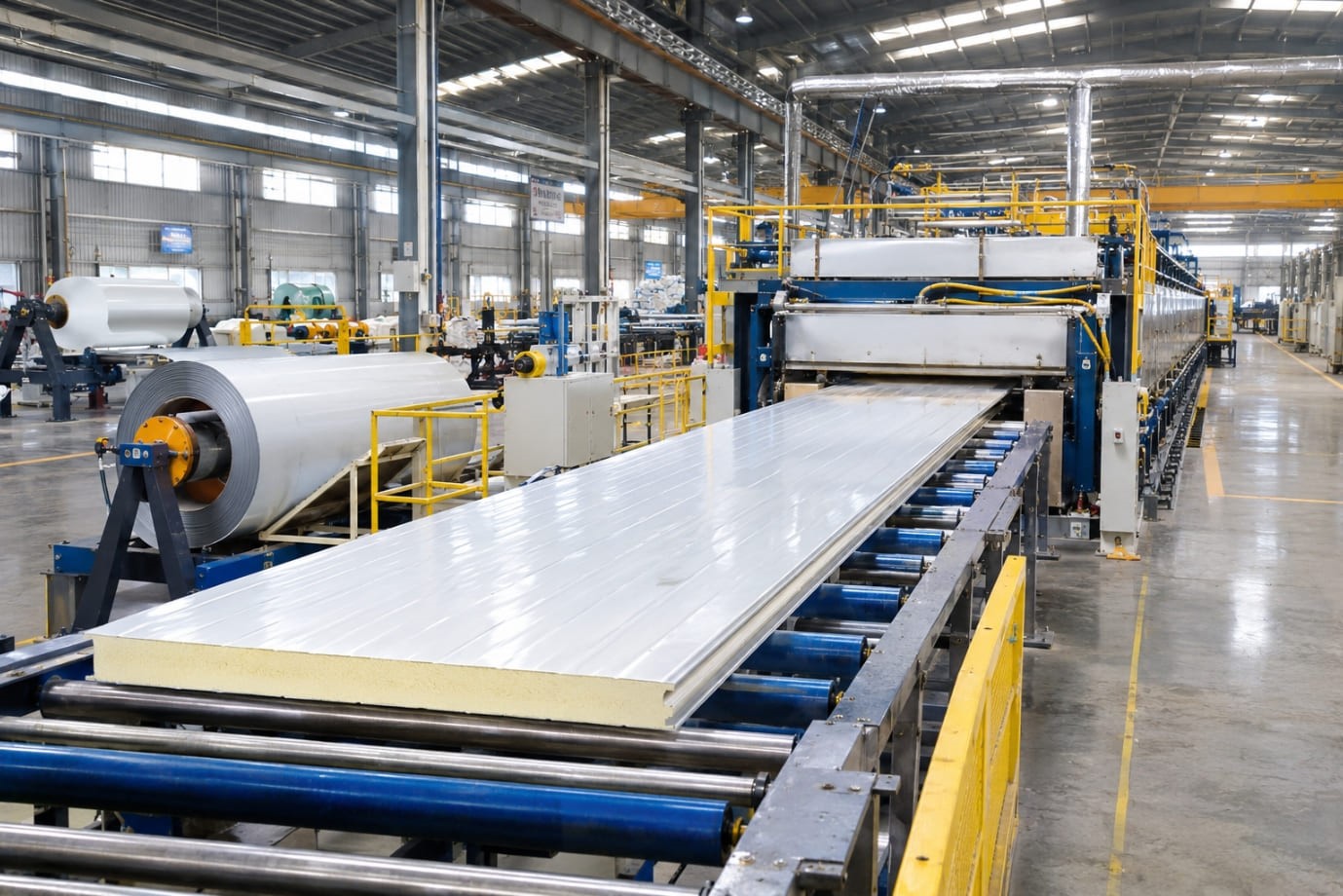
A continuous sandwich panel line is particularly suitable for manufacturing PUF panels and insulated sandwich panels for large industrial and commercial projects.
Key Characteristics of Continuous Panel Lines
Some important features include:
- Integrated Production System: Connects different production operations into one organized setup.
- High Automation: Uses automated equipment to improve efficiency and reduce manual involvement.
- Continuous Material Movement: Allows materials to move smoothly through different production stages.
- Clean room solutions for pharmaceutical, healthcare, and other controlled environments
- Standardized Specifications: Supports consistent panel thicknesses, dimensions and profiles.
- Consistent Output: Helps maintain uniformity in panel quality and appearance.
- High Production Capacity: Suitable for manufacturers handling large-volume orders.
Where Are Continuous Panel Lines Commonly Used?
These production systems are commonly used for manufacturing panels required in:
- Industrial Roofing and Wall Panels: For factories, sheds and commercial buildings.
- Large Warehouses: For insulated walls and roofing structures.
- Factory Buildings: For large-scale industrial construction.
- Standardized Sandwich Panels: For regular orders with predefined specifications.
- Cold Storage Infrastructure: For refrigerated warehouses and temperature-controlled facilities.
Overall, when comparing a continuous and discontinuous panel line, continuous technology is generally preferred for large-scale production where efficiency, standardized output and manufacturing consistency are major priorities.
Understanding Discontinuous Panel Lines
A discontinuous panel line is a batch-based production system used to manufacture insulated sandwich panels according to specific customer and project requirements. Unlike a continuous panel line, which is designed for large-scale standardized production, a discontinuous system offers greater flexibility in panel sizes, designs and configurations. It is particularly useful for manufacturers who handle customized orders or produce panels in smaller quantities.
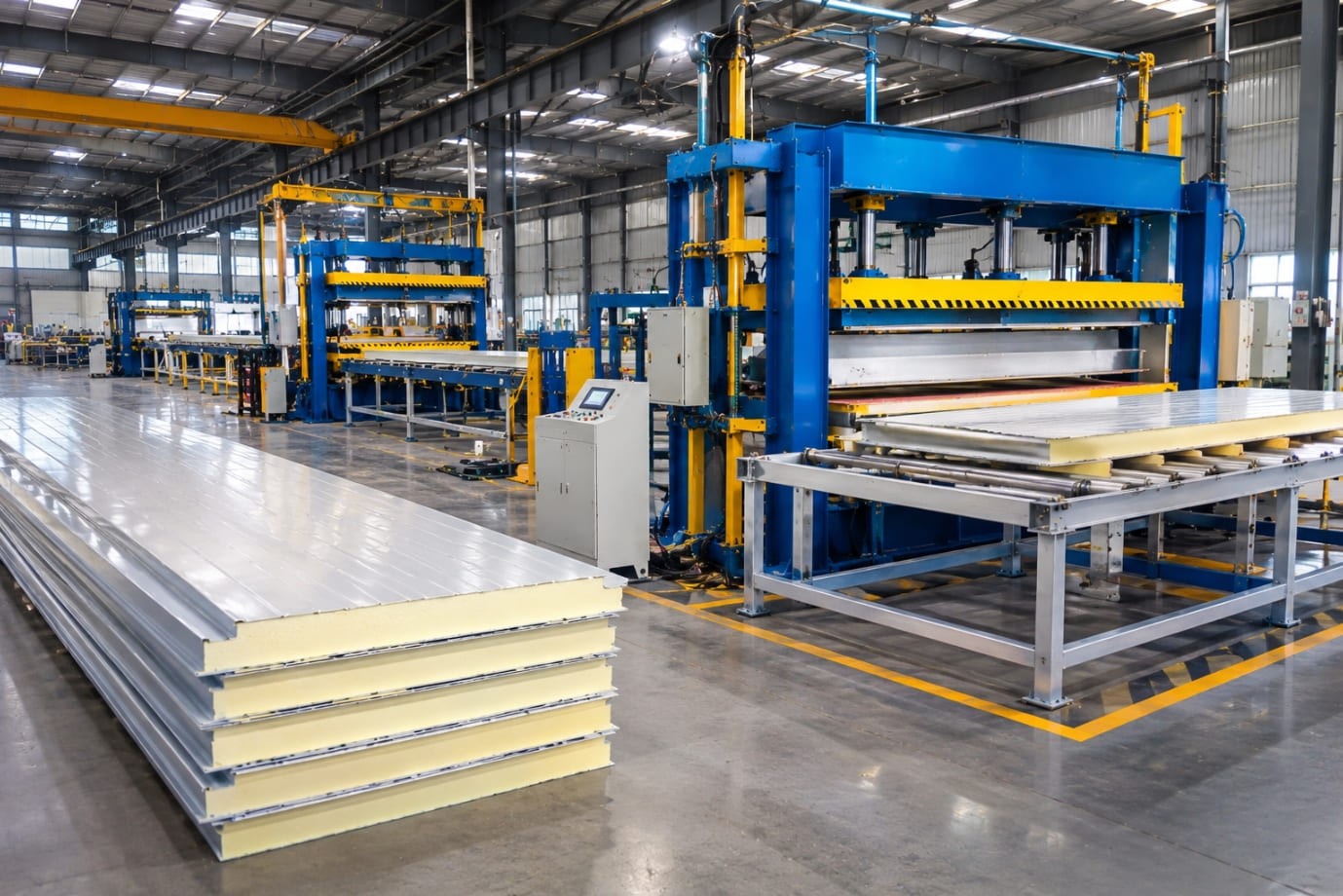
A discontinuous panel line allows manufacturers to work with different panel specifications depending on the application. This makes it a practical option for producing specialized PUF panels and insulated products where standard dimensions may not always meet project requirements.
Key Characteristics of Discontinuous Panel Lines
Some important characteristics include:
- Batch-Based Production: Panels are manufactured in separate batches according to specific production requirements.
- Flexible Configurations: Supports different panel designs and specifications.
- Greater Customization: Allows manufacturers to accommodate specialized customer requirements.
- Different Panel Dimensions: Offers flexibility in panel thicknesses, sizes and configurations, depending on equipment capacity.
- Specialized Applications: Suitable for panels requiring specific inserts, fittings or customized features.
- Smaller Production Orders: A practical choice for manufacturers handling diverse orders and limited production quantities.
Where Are Discontinuous Panel Lines Commonly Used?
These systems are commonly preferred for applications such as:
- Customized Cold Room Panels: For temperature-controlled storage facilities.
- Specialized Insulated Panels: For projects with specific insulation requirements.
- Cleanroom Applications: For customized pharmaceutical and industrial cleanroom environments.
- Insulated Doors: For cold storage and other temperature-controlled facilities.
- Panels with Special Configurations: For products requiring specific inserts, fittings or dimensions.
- Project-Specific Requirements: For customized industrial and commercial construction projects.
Overall, when comparing continuous and discontinuous panel lines, discontinuous technology is generally preferred when customization, production flexibility and specialized panel requirements are more important than achieving very high production volumes.
Continuous vs Discontinuous Panel Lines: Key Differences
When choosing a suitable panel production technology, understanding the differences between a continuous and a discontinuous panel line is important. Both systems are widely used for manufacturing PUF insulated sandwich panels, but they serve different production needs. While continuous systems focus on high-volume production and standardized specifications, discontinuous systems offer greater flexibility for customized panels and smaller orders.
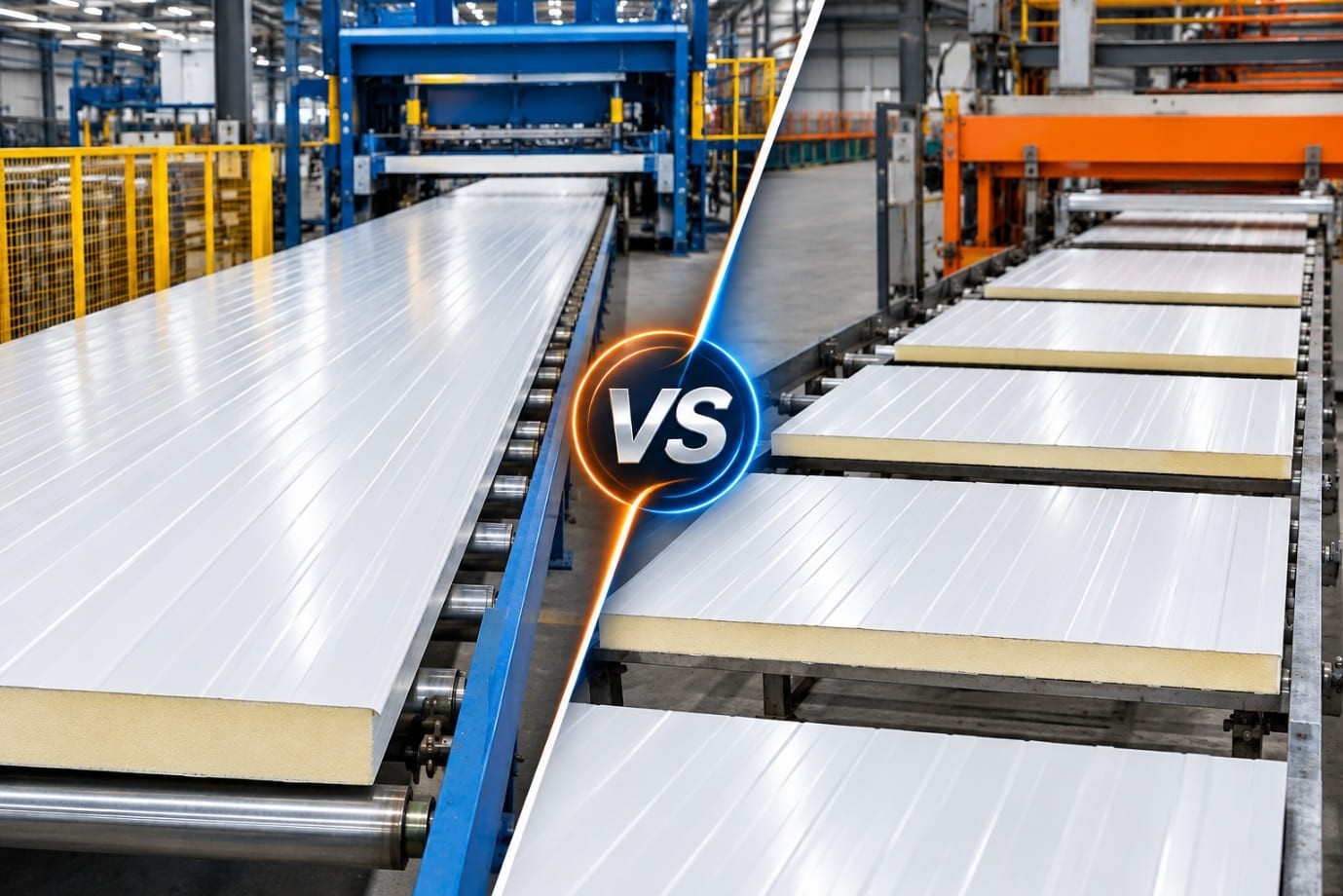
The right choice depends on factors such as production capacity, automation, investment, available space and customer requirements. Here is a detailed comparison to understand how these two technologies differ.
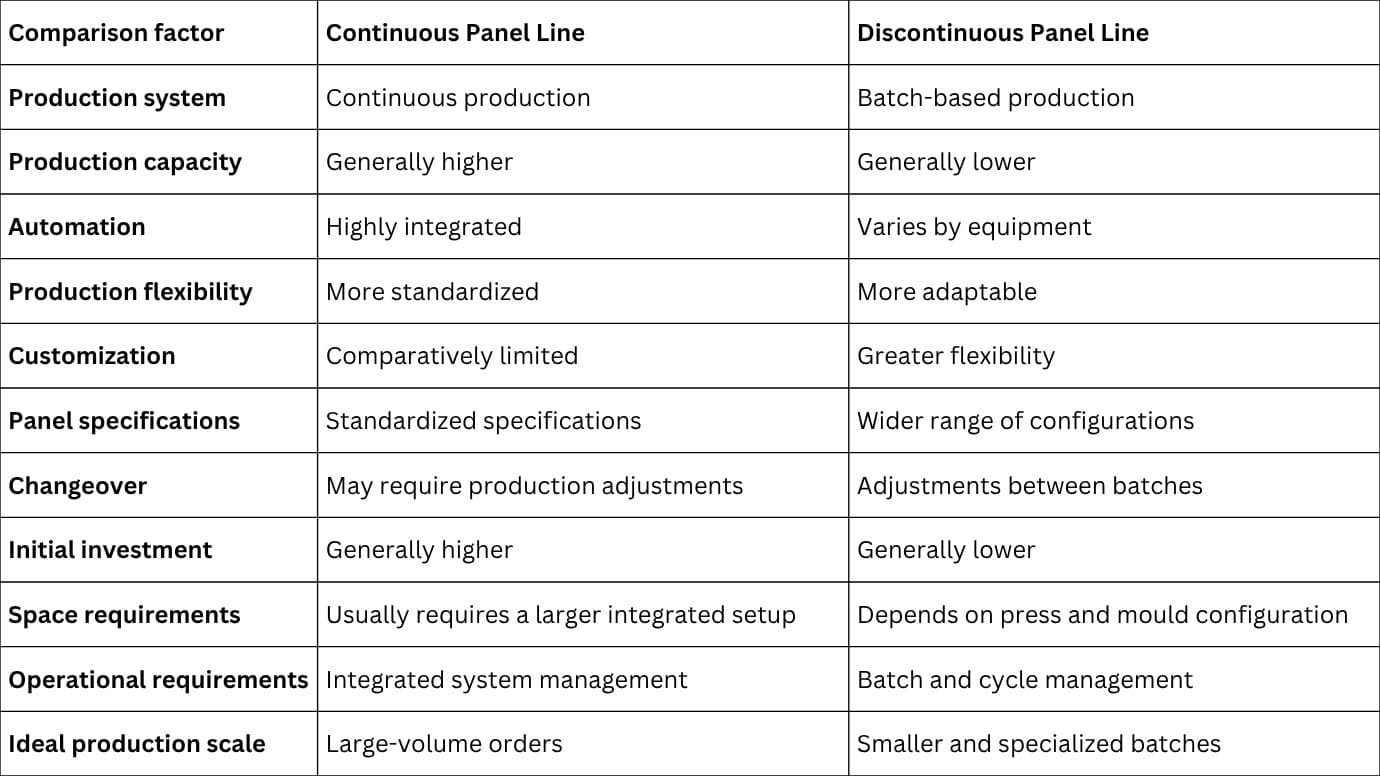
Overall, the difference between continuous and discontinuous panel lines comes down to production priorities. Manufacturers focusing on high output and standardized panels may prefer continuous technology, while those handling customized orders may find discontinuous technology more suitable.
Limitations of Continuous and Discontinuous Panel Lines
Although both technologies offer several benefits, they also have certain limitations that manufacturers should consider before making an investment. Understanding these challenges can help businesses choose the right production system based on their requirements, budget and manufacturing capacity.
➲ Limitations of Continuous Panel Lines
A continuous panel line generally requires a higher initial investment because of its integrated machinery and automation. It may also need more factory space and regular maintenance. Additionally, manufacturers handling smaller orders may find it less economical, as production adjustments and changes in specifications can involve additional setup time.
➲ Limitations of Discontinuous Panel Lines
A discontinuous panel line may have lower overall production output due to its batch-based operating system. Individual production cycles can take more time, making it less suitable for manufacturers handling large and frequent orders. It may also require more manual involvement, careful batch scheduling and additional labour, depending on the equipment.
Ultimately, the limitations of continuous and discontinuous panel lines depend on equipment capacity, factory setup and production requirements.
Factors to Consider When Choosing between Continuous and Discontinuous Panel Lines
Selecting the right panel production system requires careful planning. The choice between a continuous and a discontinuous panel line depends on several business and operational factors.
- Production Volume: Estimate your expected monthly and annual panel demand. A continuous sandwich panel line is generally suitable for large-volume orders, while a discontinuous system can be practical for smaller production requirements.
- Product Diversity: Consider whether your business mainly supplies standardized panels or offers customized sizes, thicknesses and designs. A discontinuous system usually provides greater flexibility for varied products.
- Investment Budget: Compare the initial equipment cost along with expenses for installation, utilities, maintenance and supporting infrastructure.
- Factory Space: Check the available manufacturing area. Continuous systems may require a larger, integrated setup, whereas discontinuous equipment requirements depend on the selected configuration.
- Market Demand: Understand your customers, target industries and the types of projects you serve. Your chosen system should match actual market requirements.
- Future Expansion: Consider whether you plan to increase production capacity, introduce new panel varieties or serve different markets in the coming years.
Ultimately, choosing between continuous and discontinuous panel line technology depends on your production strategy, market positioning and long-term business goals.
Why Technopuff Solutions Chooses Discontinuous Panel Line Technology
At Technopuff Solutions, the focus is on providing reliable and application-specific PUF panel solutions for industrial and commercial projects. The use of discontinuous panel line technology supports this approach by offering flexibility in panel specifications and customization. It is particularly useful for projects where standard panel sizes or configurations may not meet specific customer requirements.
Some key reasons for choosing this technology include:
- Greater Customization: Supports different panel sizes, thicknesses and specifications based on individual project requirements.
- Flexible Product Range: Helps cater to varied applications, including cold rooms, cleanrooms, warehouses and industrial buildings.
- Project-Specific Solutions: Offers flexibility for customers who need specialized panel configurations or specific insulation requirements.
- Suitable for Diverse Orders: Works well for handling different order quantities and product specifications.
- Serving Multiple Locations: Based in Ghaziabad, Delhi NCR, Technopuff Solutions provides quality PUF panels to customers across India, supporting a variety of industrial and commercial projects.
- Focus on Customer Requirements: Helps align panel specifications with the functional and practical needs of different projects.
By choosing discontinuous panel line technology, Technopuff Solutions can focus on flexible, application-based PUF panel solutions designed to meet the varied requirements of its customers.
FAQs
A. A continuous panel line supports integrated, high-volume production, while a discontinuous panel line manufactures panels in separate batches and offers greater customization flexibility.
A. A continuous panel line generally has higher production capacity and is better suited for large-volume orders with standardized specifications.
A. Yes, a discontinuous panel line can manufacture PUF sandwich panels for applications such as cold rooms, cleanrooms and industrial buildings, depending on the equipment configuration.
A. A continuous panel line can be less economical for small-scale production because of its higher initial investment and focus on large production volumes.
A. A discontinuous panel line can be a suitable choice for customized cold storage panels because it offers flexibility in panel dimensions, thicknesses and project-specific configurations.
A. When comparing a continuous and discontinuous panel line, manufacturers should consider production volume, customization needs, investment budget, factory space, market demand and future expansion plans.
Conclusion
Choosing between a continuous and a discontinuous panel line depends on your production goals, investment capacity and customer requirements. Both technologies offer distinct advantages, and the right option depends on the type of panels you want to manufacture and the market you plan to serve.
A continuous sandwich panel line is generally preferred by manufacturers handling large production volumes and standardized panel requirements. Its integrated setup and higher production capacity make it suitable for businesses supplying panels for large industrial buildings, warehouses and commercial projects. It helps support consistent output while meeting regular bulk orders.
In comparison, a discontinuous panel line is a practical choice when flexibility and customization are important. It allows manufacturers to handle smaller batches and varied panel specifications, making it suitable for specialized applications where standard sizes or designs may not meet customer expectations.
Before making a final decision, manufacturers should evaluate expected production volume, product diversity, equipment investment, available factory space and future business expansion plans. Understanding the difference between continuous and discontinuous panel line technology can help businesses select an approach that supports their operational needs and long-term objectives.
At Technopuff Solutions, we provide reliable PUF panel solutions for diverse industrial and commercial applications, including cold storage, cleanrooms and insulated infrastructure. If you are planning a new project or looking for suitable insulated panel solutions, feel free to connect with our team. We would be happy to understand your requirements and help you explore the right PUF panel solutions for your application.
For more information, you can explore our Homepage.

